
The Proc1edure

It has long been said by dentists, even us not long ago, that once you lost the bone and periodontal ligament attachment around a tooth you couldn't get it back. The best we could hope for was to halt or at least significantly slow the progression of this disease process through scaling and root planning (deep cleanings) and more frequent cleanings. Now with Periolase dental laser and LANAP (Laser-Assisted New Attachment Procedure) we can create the conditions your body needs to re-grow lost bone and connective tissue attachment!
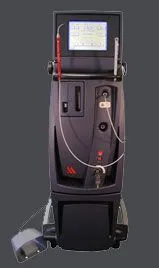
Your body repairs bone and connective tissue regularly in other areas of your body. However, because of the complexities of the periodontal pocket (primarily because it was impossible to adequately kill the bacteria and keep them out during the healing process) it has not been possible here. Now with LANAP we can selectively remove the diseased tissue, more adequately kill bacteria and clean root surfaces and seal the pocket against re-infection during the healing period.
Prior to this the only predictible way to reduce the depths of diseased periodontal pockets was to cut away gum tissue with periodontal surgery. This is painful to recover from and leaves the roots of the teeth exposed and sensitive. LANAP is remarkably easy to heal from. Most people take over-the-counter pain relievers such as Ibuprofen and are able to return to normal daily activities the same day.
This is a revolutionary new treatment and we are happy and excited to offer it here at Nathan Gelder DMD. If you would like to know more please call, we would be happy to schedule a no-cost consultation to determine if you are a candidate for this procedure and answer any questions.
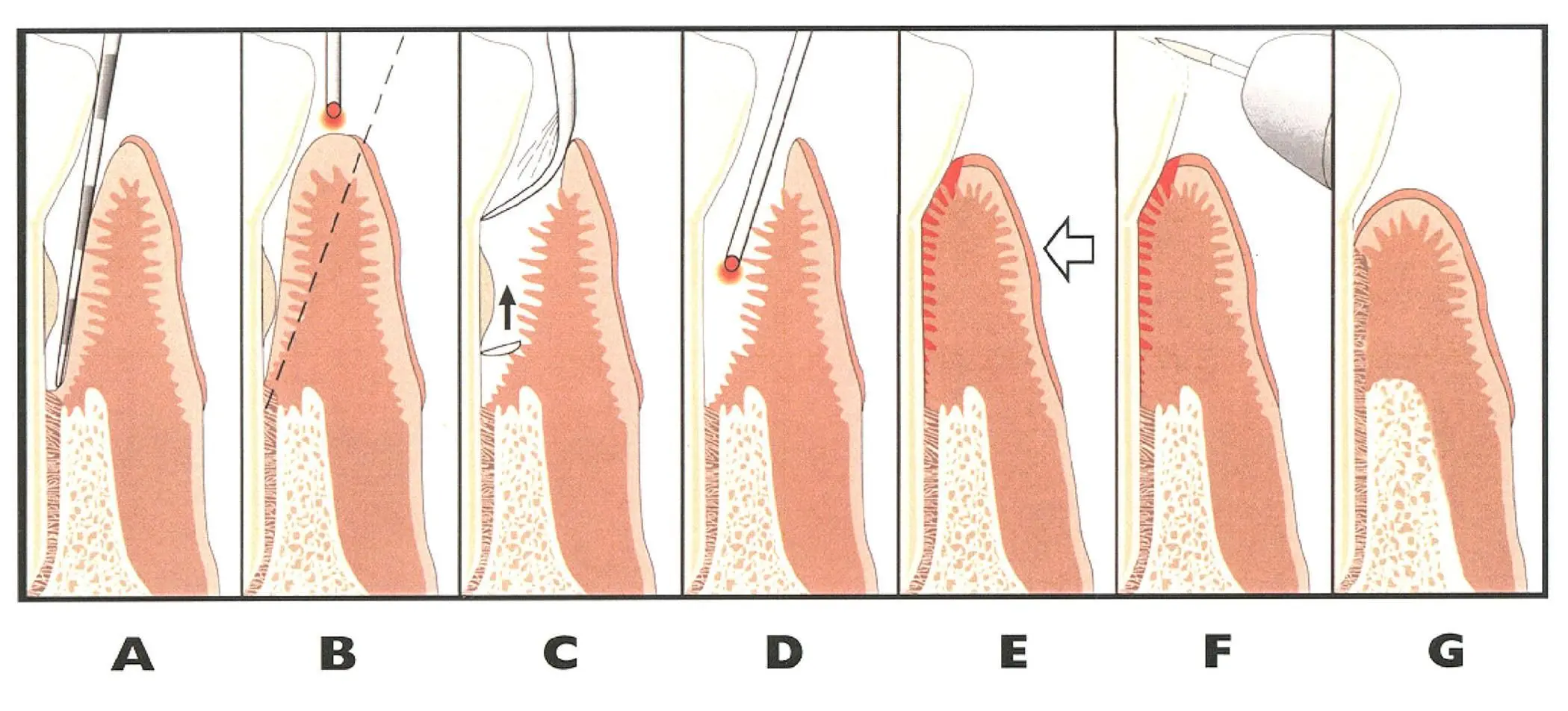
- A- probe detetects diseased pocket
- B- laser removes diseased pocket lining and kills bacteria
- C- more accessible root surface thoroughly cleaned
- D- laser seals pocket using different setting
- E- seaked pocket, ready to heal
- F- bite is adjusted as needed
- G- healed pocket, bone healed and new gum attachment formed
The Cost
We know that this is on everyone's mind. The cost does vary somewhat from person to person and it will be addressed at the consult appointment. In many ways it will be more expensive over time to not have this procedure done if it is needed. Having to pull teeth and deal with gum related infections is painful and expensive. Replacing missing teeth can be very expensive. The burden of dealing with missing and loose teeth, bleeding gums and the many other health effects that gum disease can contribute to are hard to quantify, but are certainly significant. The cost of this procedure for most people is similar to replacing one tooth with a bridge or implant and less than pulling the remaining teeth and making a set of dentures. Most insurance plans do cover this procedure and low-no interest financing is available on approved credit.
The Disease
Periodontal disease is also known as gum disease or periodontitis. There are various stages of gum disease, and the two most common forms are gingivitis and adult periodontitis. Gingivitis is an inflammation or infection of the gums (gingiva) that is an early stage of periodontal disease. When left untreated, gingivitis may progress to periodontal disease, which can progress to the loss of teeth. Only a professional -a dentist or periodontist -can diagnose gum disease, which often is painless. Research shows that periodontal disease is also linked to heart disease, stroke, diabetes and premature birth.
A combination of bacteria and acids in the mouth form a sticky deposit called dental plaque that clings to the teeth. Plaque that is not removed from the teeth hardens into calculus and tartar, which aggravate the gums. Pockets (filled with plaque) form between the teeth and gums -causing the irritated gums to detach or pull away from the teeth. At this point, the infection has advanced below the gum line and it can then destroy the soft tissue, bone and ligaments that support the teeth. The teeth may become abscessed and loose, and even fall out. Periodontal disease is the leading cause of tooth loss in adults. The symptoms of gingivitis are inflamed, swollen gums that bleed easily when they are brushed or flossed. Many times bad breath is present and there is little or no pain in the early stages. The late stage symptoms of periodontitis are loose teeth, spaces in between the teeth, pain upon chewing, pus around the teeth or gums, or abscessed teeth. Receding gums may be a symptom and the tooth may appear to look longer.
The Mouth-Body Connection
Gum disease is extremely prevalent in the United States, ten years ago former Surgeon General Davis Satcher termed periodontal disease the "silent epidemic." It has been estimated that about 80% of people over the age of 65 and over half of American adults have the disease. Its ability to cause tooth loss and sore bleeding gums has been well established for many years. What is becoming more apparent is its connections to the rest of the body and its role in other disease processes.
Two major diseases that have been recently studied in relation to periodontal disease are diabetes and cardiovascular disease. While it has been known for sometime that diabetics are more likely to get periodontal disease, the reverse is now being revealed. People with periodontal disease are more likely to get diabetes. Also, Studies have shown that diabetics who have their periodontal disease treated have a much easier time controlling their blood sugar.
The link between periodontal disease and cardiovascular disease isn't as well understood, however people who have a heart attack or stroke have a significantly higher rate of gum disease than the general population. Statistically, people with untreated gum disease have a two to three fold higher rate of heart attack and stroke. Much of the current research in this area is focused on inflammation in the body. It is becoming clearer that artherosclerosis is an inflammatory process. When the body is constantly fighting a chronic infection like periodontitis, it not only leads to more inflammation at the sight of the infection, but also increases the inflammatory process elsewhere in the body, for example, the arteries.
It is becoming clearer all the time that gum disease is something to take seriously, not only for the health of your mouth, but for a healthier overall body.